Corona virus plot proved to be informative, so I put a little more effort and made a Shiny app.
It's available here app.anabelov.info/covid19/
Options include:
- Day/Week: dot on the plot represents cases recorded in one day or average per week.
- Confirmed cases / Deaths
- Of course it is Canada centric, so you can see what's happening on provincial level.
Remarks on the countries list:
- You can select no more than 9 countries at once. Because 3x3 plot looks good.
- I decided to put limited list of countries because full list would be too balky.
- Selection is based on my perception of what countries my friends might be interested in.
- Special feature: Hong Kong and Macau listed separate from China.
Saturday, April 18, 2020
Sunday, March 22, 2020
Political pole
I encountered a video of one Bernie supporter. There was a picture showing that Sanders is actually a centrist, but not a socialist as everyone labelled him.
I don't know if I ever seen clearer representation of what Steven Pinker called political/ideological pole. In that case Left Pole. The terms takes analogy with geographical poles. Basically if you staying at the north pole any direction from you will be south. So, Left Pole means that you are so far left that anybody who has different views from you would automatically be labelled as right-wing.
That image was obviously made by people who strongly lean towards left. For them Sanders and Warren are in the centre or on The Pole. So, every other American politician ends up as right-wing authoritarian. Where Trump is the most hardcore authoritarian , together with Boris #eyeroll #facepalm
Notice that Auth-Left and Lib-Right areas are almost empty. Plus I think people who made this give Trump too much credit. I don't even think it is reasonable to assess his ideological stances at all. Like what's the point? He can barely utter a coherent sentence...
I don't know if I ever seen clearer representation of what Steven Pinker called political/ideological pole. In that case Left Pole. The terms takes analogy with geographical poles. Basically if you staying at the north pole any direction from you will be south. So, Left Pole means that you are so far left that anybody who has different views from you would automatically be labelled as right-wing.
That image was obviously made by people who strongly lean towards left. For them Sanders and Warren are in the centre or on The Pole. So, every other American politician ends up as right-wing authoritarian. Where Trump is the most hardcore authoritarian , together with Boris #eyeroll #facepalm
Notice that Auth-Left and Lib-Right areas are almost empty. Plus I think people who made this give Trump too much credit. I don't even think it is reasonable to assess his ideological stances at all. Like what's the point? He can barely utter a coherent sentence...
Friday, March 20, 2020
Future
Lot's of sci-fi movies in 90s depicted people wearing facemasks on the streets of future cities.
I was always sceptical about it, because, as I was reasoning, those simple facemasks won't help from air pollution.
And just like that, this year sci-fi becomes reality.
Thursday, January 23, 2020
Getting old
Recently I had a rather sad reflection concerning age. Maybe it's depressing February, I don't know.
The perception of time changes as you grow older. Time is fast when you 21, you can be different person within few months. Reflecting 10 years back is looking over half of your life. You can easily say that everything you know about the world happened within those 10 years. At the same time future is so slow. You can't wait to grow older to do this and that.
When you 70 and you look back, ten years it's nothing. After you counted seven decades you realise how fast time passes. The horrifying thought is that you left to live 10-15 years. Which will fly so fast you won't notice. On the bright side, when you old present usually is very slow. So, that is I guess a compensation for fast approaching end.
When you young present is fast, past was taking forever and future is an illusive utopia. When you old present is very slow, past went so fast you can't say if it really happened and future feels so real like an enormous wall about crush over your head.
The perception of time changes as you grow older. Time is fast when you 21, you can be different person within few months. Reflecting 10 years back is looking over half of your life. You can easily say that everything you know about the world happened within those 10 years. At the same time future is so slow. You can't wait to grow older to do this and that.
When you 70 and you look back, ten years it's nothing. After you counted seven decades you realise how fast time passes. The horrifying thought is that you left to live 10-15 years. Which will fly so fast you won't notice. On the bright side, when you old present usually is very slow. So, that is I guess a compensation for fast approaching end.
When you young present is fast, past was taking forever and future is an illusive utopia. When you old present is very slow, past went so fast you can't say if it really happened and future feels so real like an enormous wall about crush over your head.
Sunday, December 1, 2019
Relativity

There was a young lady named Bright
Whose speed was far faster than light;
She set out one day
In a relative way
And returned on the previous night.
Saturday, October 12, 2019
Clubs
I don't post motivational stuff usually. I just found this interesting and I want to share it, not only because I fell victim of that fallacy myself many times, but also I see it in a lot in people around.
That being said, the worst part is when you actually get what you want, but don't use it because, well, you "don't have time" ("rich people" problems, lol). It makes you even more miserable, because before you at least had some hope. Now it's just you, the device and excuses.
These days when I get an idea of doing something new, to avoid all that misery and not to insult myself with silly excuses, I've learned to think about planning, rather than tools. When I'm going to do that, how many times a week? How hard it's going to be? How it affect my performance at work or keeping up with household shores. So, basically if you buy siomething, plan to use it well. In short, "If you got the clubs, you got to club".
That being said, the worst part is when you actually get what you want, but don't use it because, well, you "don't have time" ("rich people" problems, lol). It makes you even more miserable, because before you at least had some hope. Now it's just you, the device and excuses.
These days when I get an idea of doing something new, to avoid all that misery and not to insult myself with silly excuses, I've learned to think about planning, rather than tools. When I'm going to do that, how many times a week? How hard it's going to be? How it affect my performance at work or keeping up with household shores. So, basically if you buy siomething, plan to use it well. In short, "If you got the clubs, you got to club".
Sunday, February 24, 2019
Culture wars
I tend to go with philosophers from Voltaire to Mill to Popper who say the only solution is to let everybody have their say and then try to figure it out in the marketplace of ideas.RIP Culture Wars
But none of those luminaries had to deal with online comment sections.
But once you remove all those things [...trolls, bots, etc...], you’re left with people honestly and civilly arguing for their opinions. And that’s the scariest thing of all.
Some people think society should tolerate pedophilia, are obsessed with this, and can rattle off a laundry list of studies that they say justify their opinion. Some people think police officers are enforcers of oppression and this makes them valid targets for violence. Some people think immigrants are destroying the cultural cohesion necessary for a free and prosperous country. Some people think transwomen are a tool of the patriarchy trying to appropriate female spaces. Some people think Charles Murray and The Bell Curve were right about everything. Some people think Islam represents an existential threat to the West. Some people think women are biologically less likely to be good at or interested in technology. Some people think men are biologically more violent and dangerous to children. Some people just really worry a lot about the Freemasons.
Each of these views has adherents who are, no offense, smarter than you are. [...] I disagree with most of them but don’t want to be too harsh on any of them. Reasoning correctly about these things is excruciatingly hard, trusting consensus opinion would have led you horrifyingly wrong throughout most of the past, and other options, if they exist, are obscure and full of pitfalls. I tend to go with philosophers from Voltaire to Mill to Popper who say the only solution is to let everybody have their say and then try to figure it out in the marketplace of ideas.
But none of those luminaries had to deal with online comment sections.
Sunday, November 11, 2018
Soviet Sci-Fi
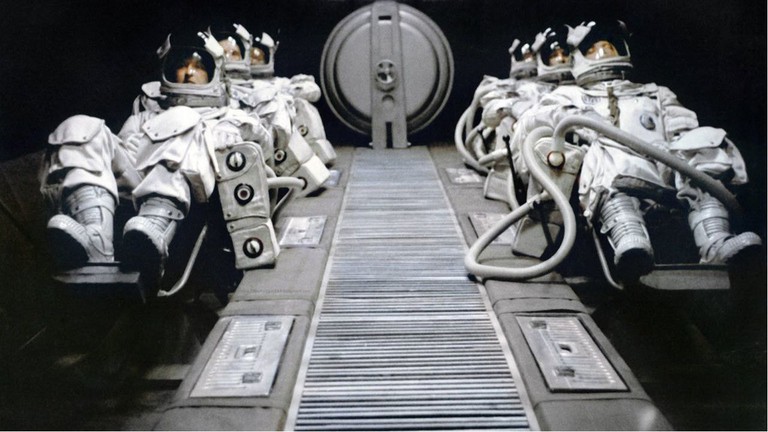
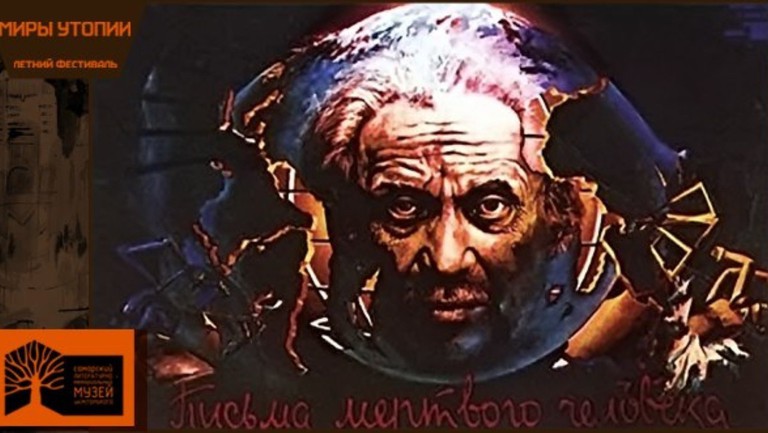
First group are movies I haven't seen and definitely want to see. Here we have Inquest of Pilot Pirx (1978) and Dead Man’s Letters (1986).
Pilot Pirx is base on Stanislav Lem's novel which is a good recommendation on its own. Second just seems appealing in terms of story setting.
In second group are movies I've seen and would strongly recommend. They are the products of late Soviet era, the time when censorship weakened. Kin-Dza-Dza! (1986) is surrealistic and post-apocalyptic style movie with marvelous actors and well written story. Zero City (1988) is better known to western movie lovers. Surrealistic story was a harsh satire on dim reality of late Soviet Union. These kind of movies you don't want to change anything in them and they don't need a "refreshing" modern remake. They good as they are.
Third group is light weight Sci-Fi made in 1970s. Here goes Moscow-Kassiopeia & Teens in the Universe and Per Aspera ad Astra (1981). They are not really interesting to watch today. The cultural reference and communist propaganda is too far to understand and appreciate even for modern generation of Russians. But, both have really interesting ideas and were technically very well done for it's time. Especially, Moscow-Kassiopeia can be turned into good young-adult movie or tv show.
Forth group movies I didn't see and most likely won't. In my case here are most of the Tarkovsky movies. I know people on the west value his work as a film director, but hear me out. When it comes to Solaris (1972) and Stalker (1979) I cannot accept his interpretation. Both stories are written by S. Lem and author himself wasn't happy how Tarkovsky interpreted his work. He almost completely destroyed original message turning it into cinematically pleasing Hollywood-style drama. I value Lem more than Tarkovsky.
Tuesday, June 26, 2018
Caddisflies
These are adult forms of Zebra caddisflies (Macrostemum zebratum). They barely eat and live only couple of weeks. Only thing they do is fuck, as much and as fast as they can. Life is short, you must try everything.
Before becoming adults they spend most of their lives as larvae crawling on the river bottom eating garbage and building houses out of junk. Once again we can see how creative mother nature is. How much we can learn from it. Even if you hit rock bottom it's not a reason to stop being creative.
Google images "caddisfly larvae case" you'll be amazed how extremely beautiful they are.
Before becoming adults they spend most of their lives as larvae crawling on the river bottom eating garbage and building houses out of junk. Once again we can see how creative mother nature is. How much we can learn from it. Even if you hit rock bottom it's not a reason to stop being creative.
Google images "caddisfly larvae case" you'll be amazed how extremely beautiful they are.
Thursday, April 26, 2018
Fail of democracy?
This guy definitely has a point. Democracies are not very effective way of governance. One the main issues Moyo points he calls short-termism. Politicians tend to concentrate on short term solutions, because time in office is short. They need to bring results within 4-5 years to win another elections, as a result politicians leave out long term goals, like infrastructure development.
But, where he misses the point is to develop any stable, effective culture of government takes time. And continuation of culture is most important virtue of effective society.
So, Moyo argument is valid only for countries which experienced interruptions in their cultural continuity. Basically developing countries. The brightest examples here are Asian "developmental dictatorships" (China, Singapore, etc).
In developing countries everything is broken and dilemma is simple: you get a dictator everything is done withing say 25 years or you can establish democracy and wait for 50 years. So, paradoxically enough "developmental dictatorships" appear as a result of the same short-termism Moyo blames makes democracies ineffective.
If we to get rid of short-termism the only known so far viable way to sustain society long term is to develop some form of democratic government. It especially seems to be true if we look at those "developmental dictatorships" today.
Also, bringing US in discussion uncovers weakness of Moyo argument. Because the whole philosophy of American democracy is ineffective, weak federal government. Tern things other way, according to Americans, is going to be dictatorship. As a result US deals with long term issues mostly in state to state level. So, my point is that US is too much of an outlier in that kind of analysis.
But, where he misses the point is to develop any stable, effective culture of government takes time. And continuation of culture is most important virtue of effective society.
So, Moyo argument is valid only for countries which experienced interruptions in their cultural continuity. Basically developing countries. The brightest examples here are Asian "developmental dictatorships" (China, Singapore, etc).
In developing countries everything is broken and dilemma is simple: you get a dictator everything is done withing say 25 years or you can establish democracy and wait for 50 years. So, paradoxically enough "developmental dictatorships" appear as a result of the same short-termism Moyo blames makes democracies ineffective.
If we to get rid of short-termism the only known so far viable way to sustain society long term is to develop some form of democratic government. It especially seems to be true if we look at those "developmental dictatorships" today.
Also, bringing US in discussion uncovers weakness of Moyo argument. Because the whole philosophy of American democracy is ineffective, weak federal government. Tern things other way, according to Americans, is going to be dictatorship. As a result US deals with long term issues mostly in state to state level. So, my point is that US is too much of an outlier in that kind of analysis.
Friday, March 23, 2018
Pan-genome of three genera
Here is another example of using Circos diagrams to visualize biological data. This time it is the concept of bacterial pan-genome.
These days sequencing become very cheap and data on bacterial genomes accumulates particularly fast. As of today GeneBank contains information on 131801 bacterial genomes, but thousands more are sequenced every day without being published. Faced with such load of information in their hands researches were able to look deeper in intra-species genome organisation. Having so many genomes allows you to ask questions like, what part of genome common for particular species? What composition of those common features makes a species?
Compared to animals, bacterial genomes are more dynamic as a result of horizontal gene transfer (HGT) between individual cells. Often HGT appears between different strains of same species, but sometimes can go even further, passing genes to other taxonomic groups (families and classes).
If we take, for example, a genus of bacteria (doesn't matter which) and compare all genomes we have on the global scale there will be three areas. Some areas of genomes are unique, because they usually found only in a few species of the genus. These unique areas often are result of HTG and might find more similarity with species from other genera or even family. Other areas, called variable, are common for almost all species in the genus, but prone to mutation. Finally the third group of regions are specific to particular taxonomic group. These areas called core genome. Both variable and core genome regions make a pan-genome. Pan-genome regions create a signature, typical genome for particular species or genus. Genome that is shared among all members of particular taxon.
In the outer circle green shows core areas in pan-genomes of three genera. Those genes that are shared among more than 90% of all strains used in the analysis.
Second circle is called GC% content. Which basically means what percentage GC bases in particular gene. This matters because genomes that make up a genus usually have similar GC%. In this case for example, Arcobacter usually has 27%, similar to Campylobacter. In the diagram threshold is set to 28% GC and everything over it highlighted red (in light blue area). You can see that Helicobacter has different GC% from other two. It doesn't it somthing wrong, it's just different.
Another important point of GC% graph it allow to see foreign elements. If some genes or genome regions have GC% content significantly different from rest of the genome, it most likely appeared there recently through HGT. If you look at Helicobacter diagram you can easily see that some regions of GC% are not colored red. More interestingly if you look at pan-genome diagram above, you wont find green or grey stripes. These are most likely candidates for Unique regions.
How virulence factors related to pan-genome.
Figure caption: Connection and distribution of virulence factors between pan-genomes of three genera based on all available complete genome sequences. Outer circle 1 showing region similarity ranging 90-100% (indicated in dark green bars) to 80-90% and 70-80% (indicated in light green and gray bars). Circle 2 shows GC content where upper (indicated in light blue) and lower (light red) boundaries set to 40% and 20%, respectively. Circle 3 shows histogram of the distribution frequency of variable and core genes where Red bars indicate genes shared by number of strains to each particular cluster, whereas Blue bars represent heterogeneity of number of strains to that cluster. Circle 4 shows virulence, antibiotic resistance and toxin genes identified in pan-genomes of each genus. GenBank identifiers (GIs) from virulence factor database (VFDB) (black), Comprehensive Antibiotic Resistance Database (CARD) (green) and Toxin-antitoxin database (TADB) (blue). IDs shown in Red are connected by lines (in the center) where connecting lines in the center link to the IDs found in pan-genomes of three genera showing homologous virulence factor (blue), antibiotic resistance (green) and toxin (purple) genes.
These days sequencing become very cheap and data on bacterial genomes accumulates particularly fast. As of today GeneBank contains information on 131801 bacterial genomes, but thousands more are sequenced every day without being published. Faced with such load of information in their hands researches were able to look deeper in intra-species genome organisation. Having so many genomes allows you to ask questions like, what part of genome common for particular species? What composition of those common features makes a species?
Compared to animals, bacterial genomes are more dynamic as a result of horizontal gene transfer (HGT) between individual cells. Often HGT appears between different strains of same species, but sometimes can go even further, passing genes to other taxonomic groups (families and classes).
If we take, for example, a genus of bacteria (doesn't matter which) and compare all genomes we have on the global scale there will be three areas. Some areas of genomes are unique, because they usually found only in a few species of the genus. These unique areas often are result of HTG and might find more similarity with species from other genera or even family. Other areas, called variable, are common for almost all species in the genus, but prone to mutation. Finally the third group of regions are specific to particular taxonomic group. These areas called core genome. Both variable and core genome regions make a pan-genome. Pan-genome regions create a signature, typical genome for particular species or genus. Genome that is shared among all members of particular taxon.
In the outer circle green shows core areas in pan-genomes of three genera. Those genes that are shared among more than 90% of all strains used in the analysis.
Second circle is called GC% content. Which basically means what percentage GC bases in particular gene. This matters because genomes that make up a genus usually have similar GC%. In this case for example, Arcobacter usually has 27%, similar to Campylobacter. In the diagram threshold is set to 28% GC and everything over it highlighted red (in light blue area). You can see that Helicobacter has different GC% from other two. It doesn't it somthing wrong, it's just different.
Another important point of GC% graph it allow to see foreign elements. If some genes or genome regions have GC% content significantly different from rest of the genome, it most likely appeared there recently through HGT. If you look at Helicobacter diagram you can easily see that some regions of GC% are not colored red. More interestingly if you look at pan-genome diagram above, you wont find green or grey stripes. These are most likely candidates for Unique regions.
How virulence factors related to pan-genome.
Figure caption: Connection and distribution of virulence factors between pan-genomes of three genera based on all available complete genome sequences. Outer circle 1 showing region similarity ranging 90-100% (indicated in dark green bars) to 80-90% and 70-80% (indicated in light green and gray bars). Circle 2 shows GC content where upper (indicated in light blue) and lower (light red) boundaries set to 40% and 20%, respectively. Circle 3 shows histogram of the distribution frequency of variable and core genes where Red bars indicate genes shared by number of strains to each particular cluster, whereas Blue bars represent heterogeneity of number of strains to that cluster. Circle 4 shows virulence, antibiotic resistance and toxin genes identified in pan-genomes of each genus. GenBank identifiers (GIs) from virulence factor database (VFDB) (black), Comprehensive Antibiotic Resistance Database (CARD) (green) and Toxin-antitoxin database (TADB) (blue). IDs shown in Red are connected by lines (in the center) where connecting lines in the center link to the IDs found in pan-genomes of three genera showing homologous virulence factor (blue), antibiotic resistance (green) and toxin (purple) genes.
Tuesday, March 6, 2018
Trascriptome analysis of programmed cell death in Cryphonectria parasitica
This is the first post in series dedicated to my research and project I'm involved in. Also, I'm going to bring here some analysis work I'm doing just to myself. To find out more follow the tags #myresearch and #myanalysis.
This time I'll bring an example of how to use Circos tool to visualize genomic and transcriptomics data. This tool is visually very appealing, but more you put on the graph less useful it becomes.
Before we start I want to introduce one basic concept from mycology, barrage. On figure below barrage shown by arrows and compatible strains' interactions shown by arrowheads.
In a nutshell barrage or incompatibility reaction is a form of innate immune response that causes two genetically distinct fungal strains reject each other. In fungal world most of interactions between strains happen through hyphal fusion or anastomosis. If all immune signals check and no disagreement found two strains fuse and continue to exist as a single individual. But if immune response triggered, two strains form a barrage, a separation wall made out of dead cells. Barrage separates two strains restricting exchange of genetic material. It gives us a glimpse into early evolution of sexual reproduction and immunity. Basically saying if we too different from each other genetically direct exchange of genes may cause more damage than good, so lets have sex instead.
Circular diagram below shows genes differentially expressed in C. parasitica during incompatibility reaction.
This diagram allows to see overall picture of how C. parasitica genes (red dots) behave in relation to genome map. Plus you can compare them to genes of P. anserina (purple) and N. crassa (green) in similar reaction. Not particularly informative, but you certainly can take something out of it.
First of all C. parasitica has much more upregulated genes (pink area) than other two fungi. Also there are transcriptionally inert areas of genome, showing no gene activation. And finally lack of correlation in expression rate between three species. Basically red dots do not appear together with purple and green, showing different or no expression at all.
Figure caption: Gene differential expression (DE) shown on C. parasitica genome map (11 largest scaffolds).
Diagrams from outside to inside: Black lines show genome map of 11 scaffolds, each tick mark corresponds to 100,000 bp. Inside the outer black lines, blue marks indicate previously annotated genes on JGI C. parasitica genome portal and orange marks indicate novel genes. Novel genes are transcripts which demonstrated detectable level of expression in areas of genome previously not annotated on genome portal. First circle shows expressed genes, and second circle shows DE genes during barrage. Interior to this are C. parasitica gene IDs of DE genes where black IDs indicate genes differentially expressed during barrage only in C. parasitica, green and purple IDs indicate that orthologs of those genes are DE during Heterokaryon Incompatibility (HI) in N. crassa and P. anserina respectively. The inner-most pink, grey and blue bands show plots of individual genes expression. The Y axis indicates genes differential expression in log2 scale. Y axis pink colour indicates upregulated (y> 2), blue – downregulated (y< -2) and grey (2>y>-2) indicate non-DE genes. Red dots indicate C. parasitica genes, green and purple dots indicate DE orthologs during HI in N. crassa and P. anserina respectively.
Before we start I want to introduce one basic concept from mycology, barrage. On figure below barrage shown by arrows and compatible strains' interactions shown by arrowheads.
In a nutshell barrage or incompatibility reaction is a form of innate immune response that causes two genetically distinct fungal strains reject each other. In fungal world most of interactions between strains happen through hyphal fusion or anastomosis. If all immune signals check and no disagreement found two strains fuse and continue to exist as a single individual. But if immune response triggered, two strains form a barrage, a separation wall made out of dead cells. Barrage separates two strains restricting exchange of genetic material. It gives us a glimpse into early evolution of sexual reproduction and immunity. Basically saying if we too different from each other genetically direct exchange of genes may cause more damage than good, so lets have sex instead.
Circular diagram below shows genes differentially expressed in C. parasitica during incompatibility reaction.
First of all C. parasitica has much more upregulated genes (pink area) than other two fungi. Also there are transcriptionally inert areas of genome, showing no gene activation. And finally lack of correlation in expression rate between three species. Basically red dots do not appear together with purple and green, showing different or no expression at all.
Figure caption: Gene differential expression (DE) shown on C. parasitica genome map (11 largest scaffolds).
Diagrams from outside to inside: Black lines show genome map of 11 scaffolds, each tick mark corresponds to 100,000 bp. Inside the outer black lines, blue marks indicate previously annotated genes on JGI C. parasitica genome portal and orange marks indicate novel genes. Novel genes are transcripts which demonstrated detectable level of expression in areas of genome previously not annotated on genome portal. First circle shows expressed genes, and second circle shows DE genes during barrage. Interior to this are C. parasitica gene IDs of DE genes where black IDs indicate genes differentially expressed during barrage only in C. parasitica, green and purple IDs indicate that orthologs of those genes are DE during Heterokaryon Incompatibility (HI) in N. crassa and P. anserina respectively. The inner-most pink, grey and blue bands show plots of individual genes expression. The Y axis indicates genes differential expression in log2 scale. Y axis pink colour indicates upregulated (y> 2), blue – downregulated (y< -2) and grey (2>y>-2) indicate non-DE genes. Red dots indicate C. parasitica genes, green and purple dots indicate DE orthologs during HI in N. crassa and P. anserina respectively.
Wednesday, July 19, 2017
Painkillers
Article on opioid epidemics.
While it is really an issue, problem do seems to be a bit overblown.
In these kind of cases I blame how in western countries journalists like first hand experience.
You can never find a report in press generally describing an issue. Informing you on overall matter. It is always have to be accompanied by interviews with real simple folks who got into it.
Of course it gives the problem a human face, something to relate to. But often it creates biases. As people tend to believe testimonies more than to careful analysis.
While it is really an issue, problem do seems to be a bit overblown.
In these kind of cases I blame how in western countries journalists like first hand experience.
You can never find a report in press generally describing an issue. Informing you on overall matter. It is always have to be accompanied by interviews with real simple folks who got into it.
Of course it gives the problem a human face, something to relate to. But often it creates biases. As people tend to believe testimonies more than to careful analysis.
Monday, July 17, 2017
Saturday, January 28, 2017
History
V.V. Shulgin is a person with very interesting history. He was Russian nationalist, monarchist, constitutional monarchy advocate and one of the members of white movement (called white as opposed to red,old Russia anti-bolshevik movement). Was a member of all sessions of Duma (first Russian parliament). He was among those who accepted abdication of Nicholas II.
So, conservative, nationalist and one who was fighting communists, after all in 1920 wrote this (highlights are mine):
...our ideas jumped over forefront...they (bolsheviks) rebuild Russian army... It might be terrible to acknowledge that, but it's what it is... Bolsheviks raised the Flag of United Russia... Communist International appeared as weapon... to expand Russia's territory...and Moscow power... no one can deny, russian language again rules over 1/6 of the world and all that in the name of Communist International... bolsheviks: 1) rebuilding Russian army; 2) restoring Russian borders... 3) preparing the return of Russia's Tsar.
Valuable lesson here: Some people may appear wise and insightful, by just being narrow minded. It just happens sometimes that time steps on the same tracks with your narrow point of view. Never for long, though.
Saturday, January 14, 2017
Cambodia
Some thoughts about Cambodia.
Money
That was tough experience converting between Riel and USD. And I think they should ban using dollars. It makes everything more expensive. I mean most stuff costs $1, because it's hard to split it further without using local money. Like in Thailand, $1 is about 60 baht. So you can conveniently split dollar at least by 6.
Beggars
People constantly begging for money almost everywhere. Victims of war, mothers with babies or children with big eyes. Striking thing was not that I never seen it before. I've seen lots of stuff like that back in Russia. It was that I haven't noticed anything like that in Thailand. Still mistery for me.
Sometimes it is interesting what things remind me about my motherland. When I talk with Chinese (esspessially mainland and HK) they remind me Russians by their lifestyle choices and maybe a bit of temperament. And now beggars in Cambodia.
Money
That was tough experience converting between Riel and USD. And I think they should ban using dollars. It makes everything more expensive. I mean most stuff costs $1, because it's hard to split it further without using local money. Like in Thailand, $1 is about 60 baht. So you can conveniently split dollar at least by 6.
Beggars
People constantly begging for money almost everywhere. Victims of war, mothers with babies or children with big eyes. Striking thing was not that I never seen it before. I've seen lots of stuff like that back in Russia. It was that I haven't noticed anything like that in Thailand. Still mistery for me.
Sometimes it is interesting what things remind me about my motherland. When I talk with Chinese (esspessially mainland and HK) they remind me Russians by their lifestyle choices and maybe a bit of temperament. And now beggars in Cambodia.
Wednesday, November 30, 2016
Random thoughts
God created everything in 7 days. It's a biblical myth usually called 6 days creation. But we know that a day is one rotation of Earth around the sun. And according to the story Earth appears only on second "day", after the sun (light). So, considering that it should be called 5ish days creation.
Thursday, November 24, 2016
Climate
This is interesting.
So apparently, Exxon accuses Rockefeller to plot a climate change conspiracy against them.
Interesting times indeed.
Sunday, November 6, 2016
Pronauns
Peterson is right that legislature on the subject of pronouns is bad idea. It is rather silly that I can butcher person's name, but must use right pronoun. But he's wrong about being so stubborn on his refusal to call people whatever way they want. At the beginning of term every teacher takes students list in his or her or zie or per class and establishes how students want to be called.
And I have the same issue as Peterson, having a hard time to remember students names. But if there is no law forcing me do so whole pronouns story doesn't make much difference. I can't remember names of 90% of students (well ok, people), but now in addition to that I won't be able to remember their pronouns. In most cases names I remember are students who perform well in class or ask a lot of questions. If student makes those efforts in class, I will make an effort to remember names, nicknames, pronouns etc. I feel it is feir enough.
Friday, October 21, 2016
Mozart - Requiem
This is one those thing which staed with me since childhood.
An amazing piece of music from first minute till the last.
Subscribe to:
Posts (Atom)